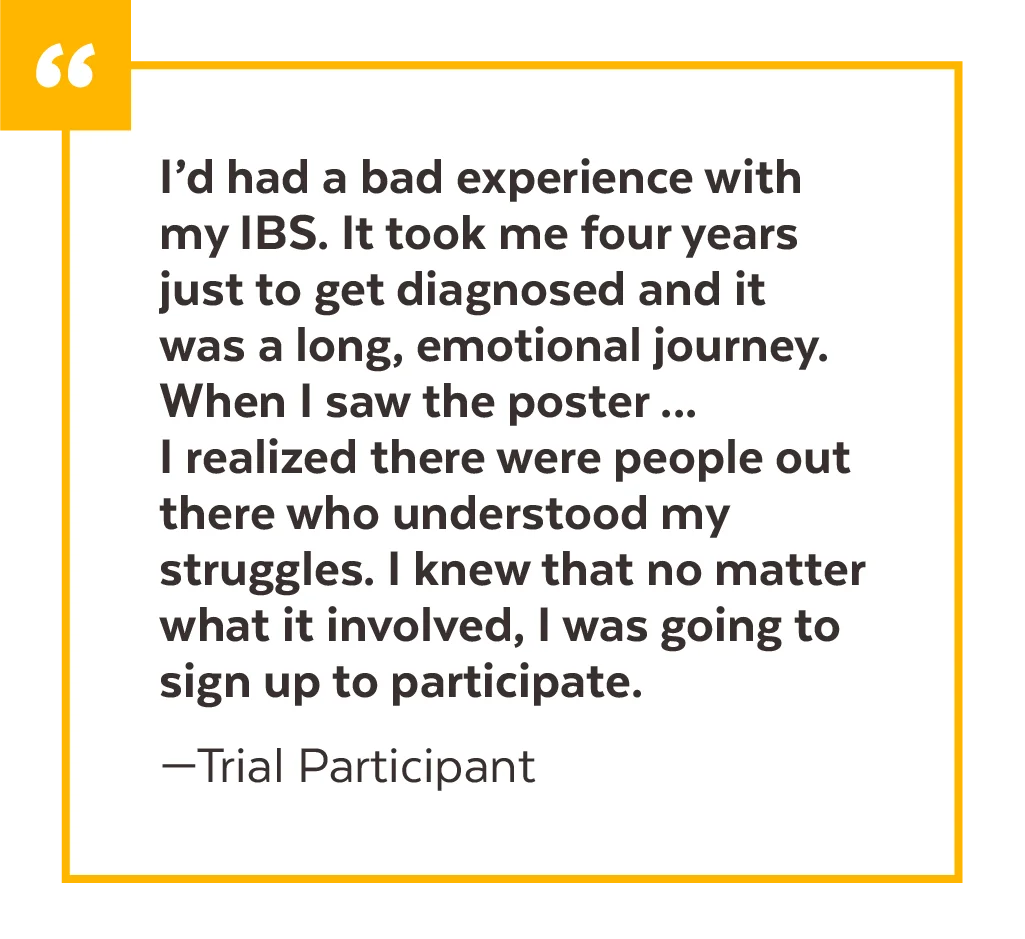
What We Did
The Client
Pharmabiotix, Inc. is a pharmaceutical company based in Dallas, Texas. Their primary product is a natural treatment for people who suffer from irritable bowel syndrome with diarrhea (IBS-d). It’s one of the few natural products on the market that can treat the condition.

The Project
Pharmabiotix asked the Northern Alberta Clinical Trials + Research Centre (NACTRC) for help running a clinical study to test the IBS-d treatment. We’d worked with NACTRC before, so when it came time to recruit patients for the study, they asked us to lend a hand. The study needed 50 participants in Edmonton, all with IBS-d and a very specific set of medical prerequisites.
Goal
Raise awareness about the clinical trial, drive traffic to the website, and recruit trial participants.
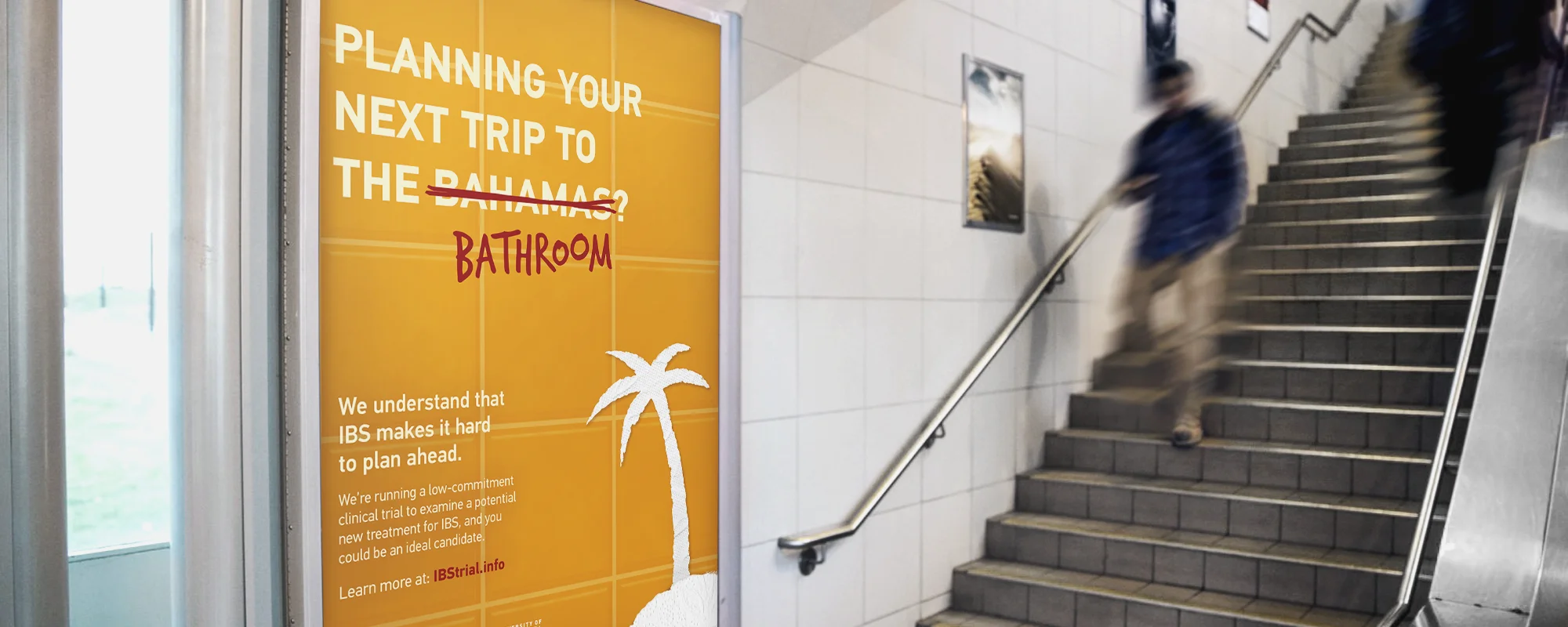
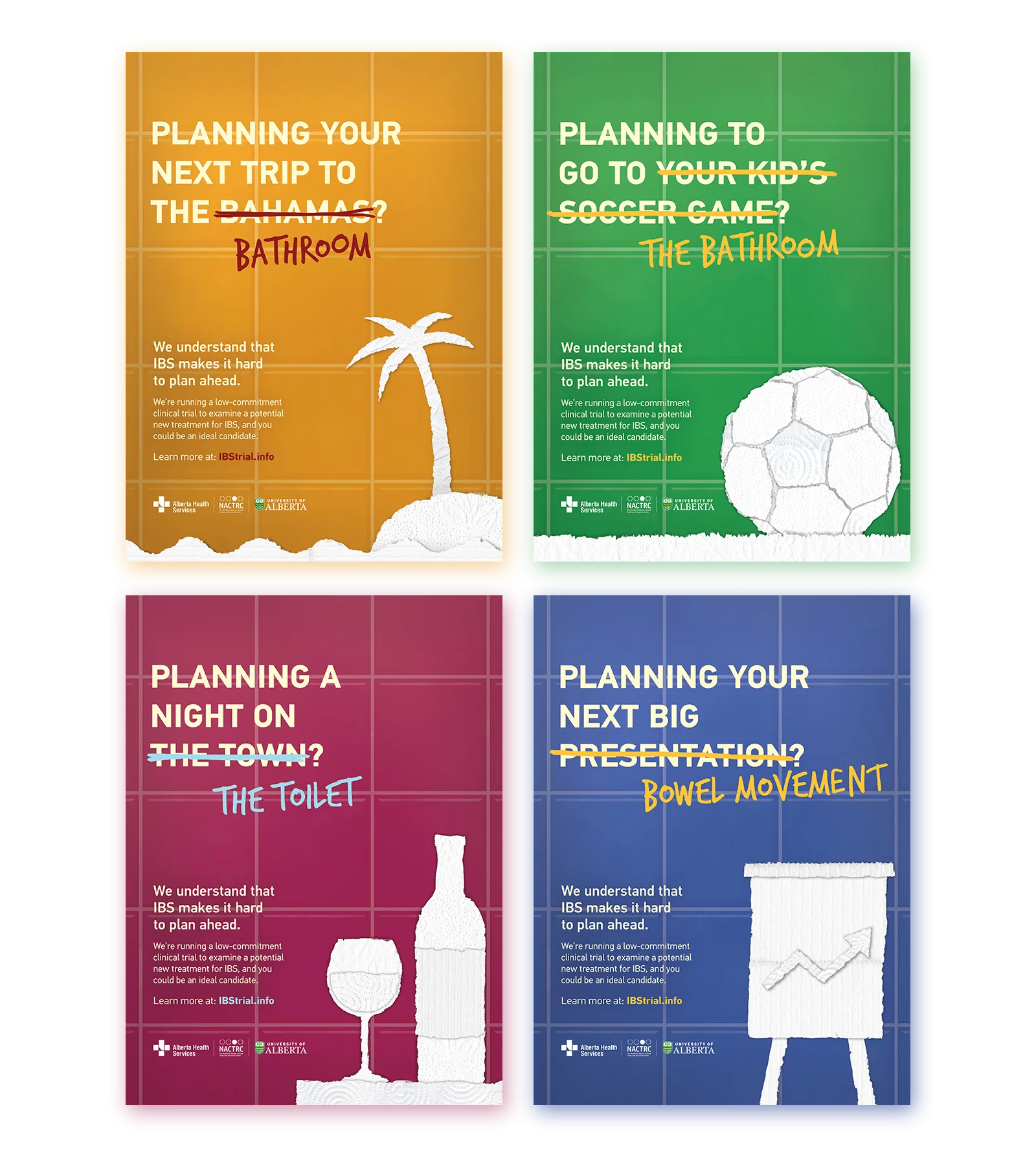
LRT Ads
Public transportation can be uncomfortable for those suffering from IBS-d, as they have no idea if the condition will strike while they’re in transit.
We placed posters in LRT cars to reach this audience during their daily commute. The posters focused on the fact that IBS-d sufferers can’t easily plan ahead because of their condition. We emphasized this by taking everyday activities, like work or a night out with friends, and interrupting them with a visit to the bathroom.
Radio Ads
Working with 102.3 NOW! Radio, we carried the LRT concept onto the air with a set of matching radio ads. The creative still focused on IBS-d sufferers’ inability to plan ahead, but we focused less on the everyday irritations and more on life’s big moments.
We took advantage of some of the great features only radio advertising offers, particularly sound effects, to create situations that everyone with IBS-d can identify with.
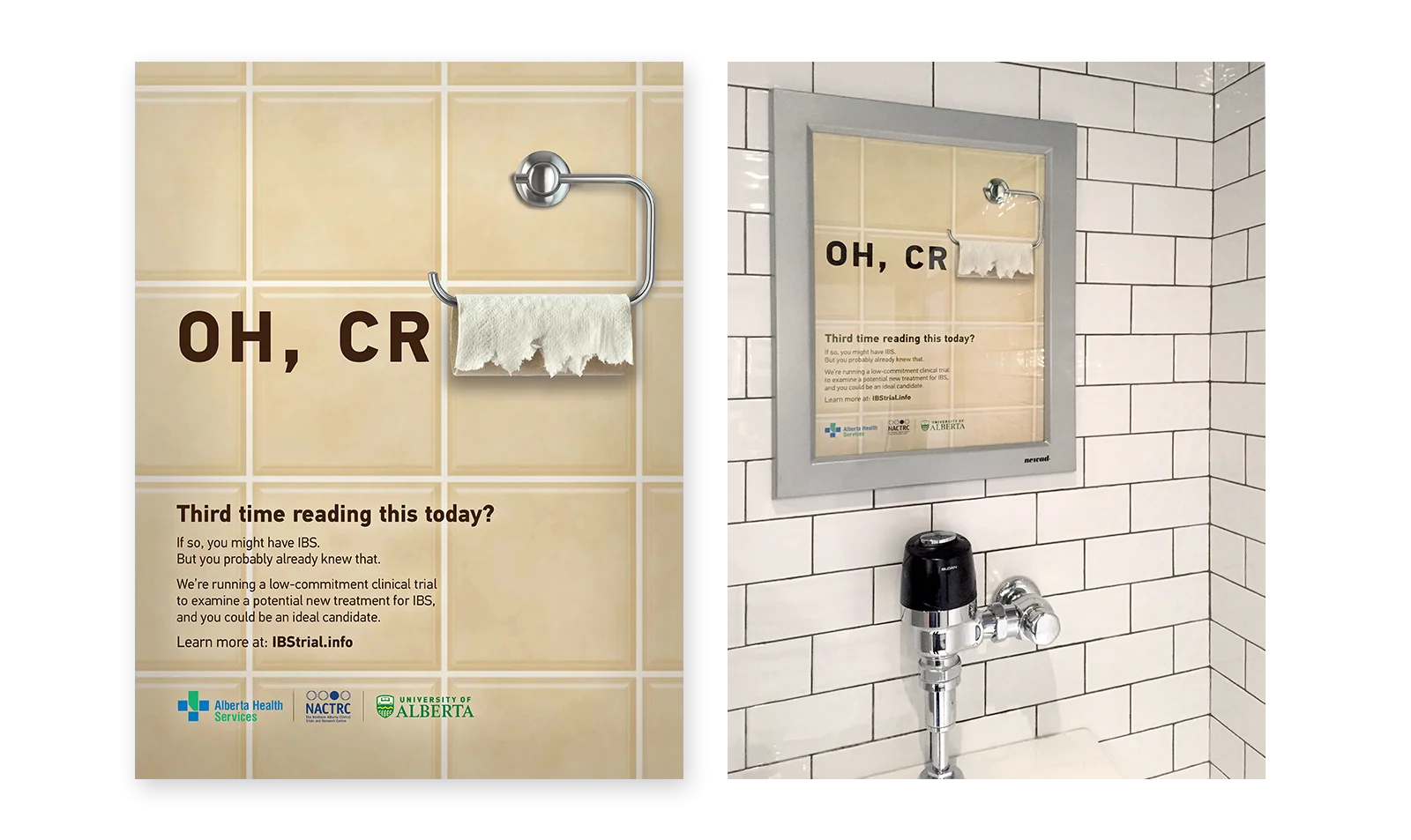
Bathroom Ads
People on the toilet tend to look for anything that’ll distract them. So with a campaign for IBS-d, bathroom ads were a given. We placed posters at high-traffic locations throughout the city where people might visit the bathroom more than once. The posters draw attention to the inconvenience of having IBS-d while presenting a possible answer to the reader’s problem.
Online Ads
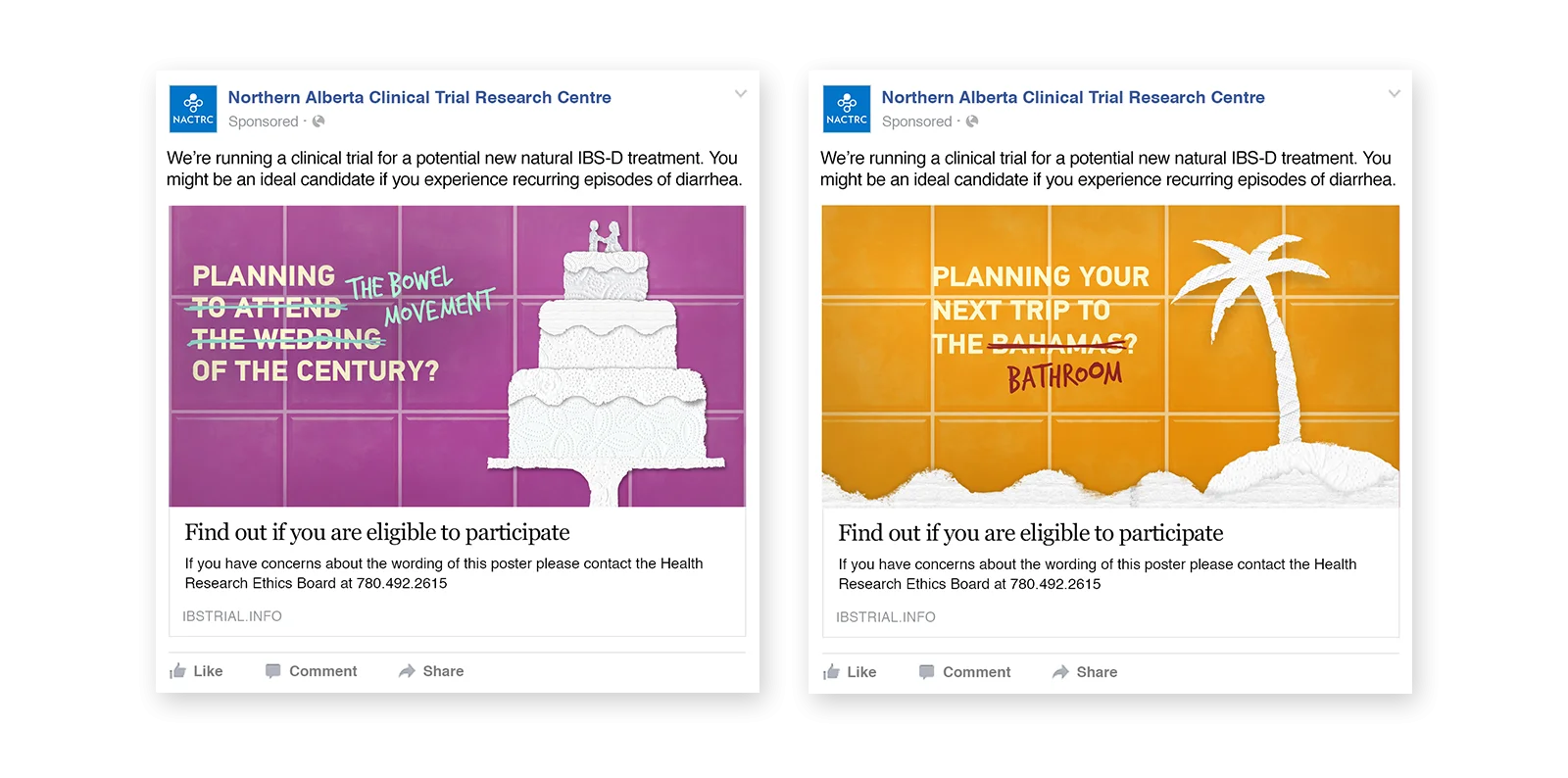
People with IBS-d (or any long-term medical condition, really) gather online for support from others going through the same problems. Because it’s a sensitive subject, we wanted to provide a way for people to engage with these ads more privately. We ran a Facebook and Google online ad campaign to reach these people.
On the Facebook ads, people actually started tagging each other as a joke, but this only served to spread our message even more. We saw the best results on Facebook, so we refocused our online efforts to this platform.
Landing Page
Instead of forcing potential participants to talk about their IBS-d with strangers over the phone, we wanted to provide a way for them to apply without any embarrassment. That’s why all of our ads directed people to a landing page that contained more information about the study.
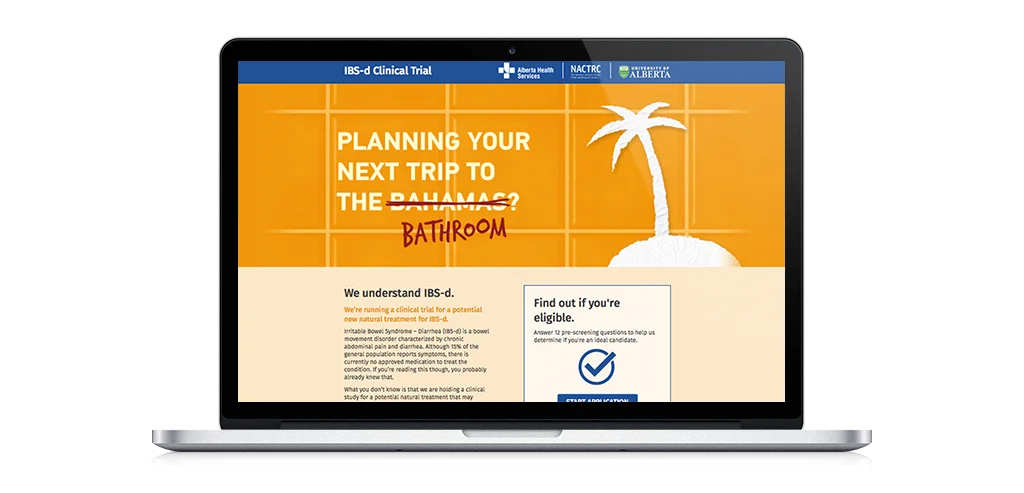
We designed the page with a look and feel that matched the ads so people knew they were in the right place. It included more information about the trial, including what it was meant to do and what participation involved.
The page itself was very simple and only permitted two actions.
- Answer 12 pre-screening questions. Visitors could answer some basic questions to determine right away whether or not they were eligible. Those who weren’t got a nice email thanking them for their time. Eligible patients, on the other hand, were asked to wait until someone from NACTRC contacted them to set up an in-person exam.
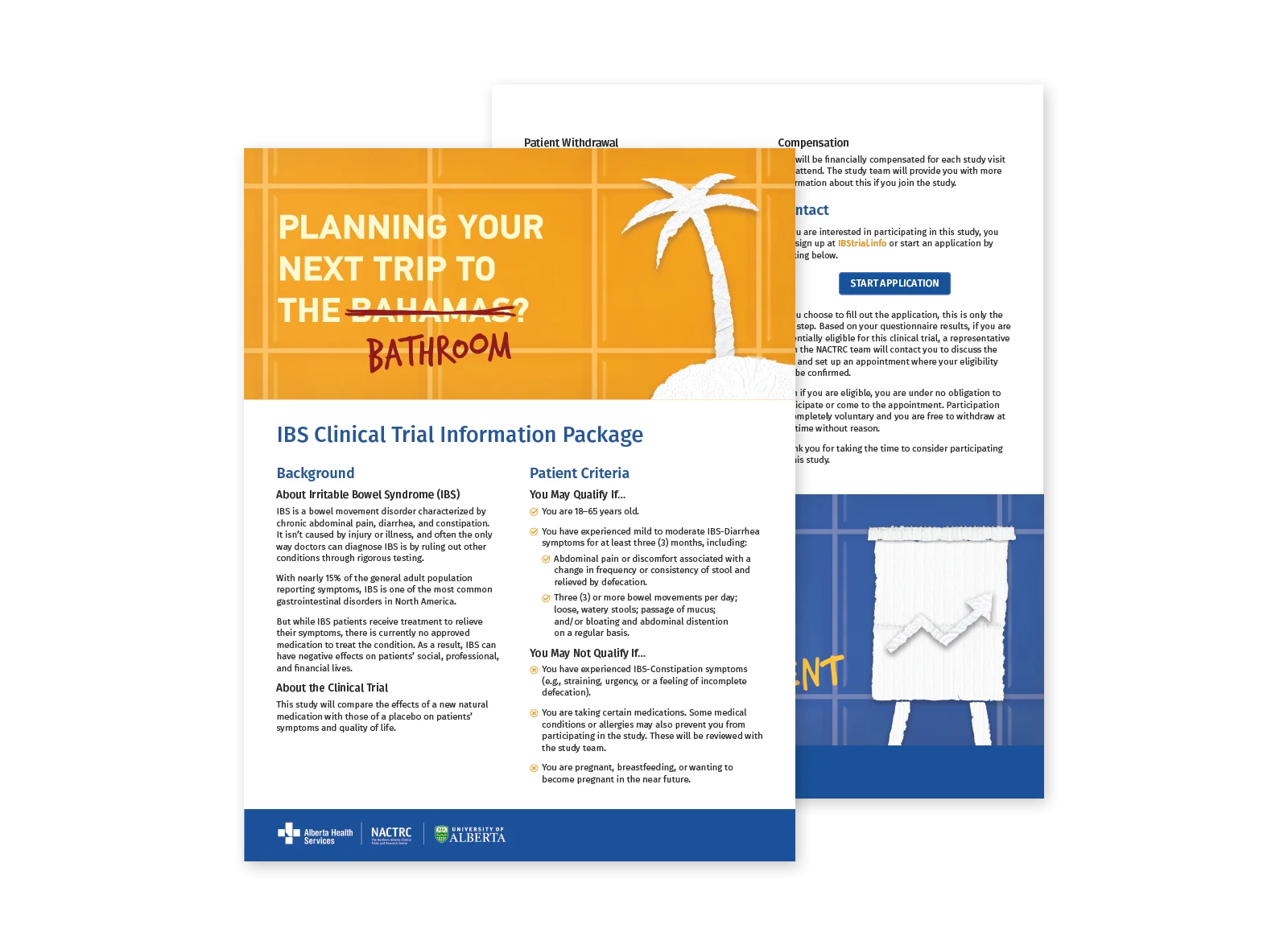
- Download the info package. If the visitor wasn’t sure about signing up, they could submit their email address to receive an information packet that described the trial in greater detail. Then they could either fill out the form or call someone at NACTRC for a one-on-one Q+A.
The Results
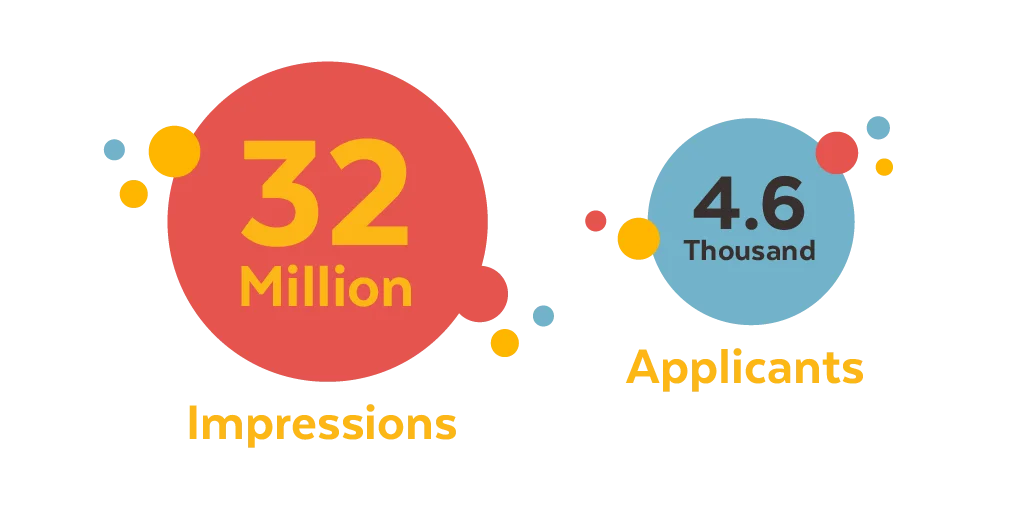
Thousands of people applied for the 50 spots in the clinical trial. While not all of them were eligible (the pre-screening criteria were pretty specific), the study coordinators had no trouble filling their patient roster.
Habit got a little something out of this project, too. We do great work to get results, not to earn awards, but it was still pretty nice to take home the 2018 Hashtag Award for Best Social Media Campaign.
But more importantly, this project gave us a better understanding of what people with IBS-d go through every day. And we’re happy we could be part of something that might be able to help them.